
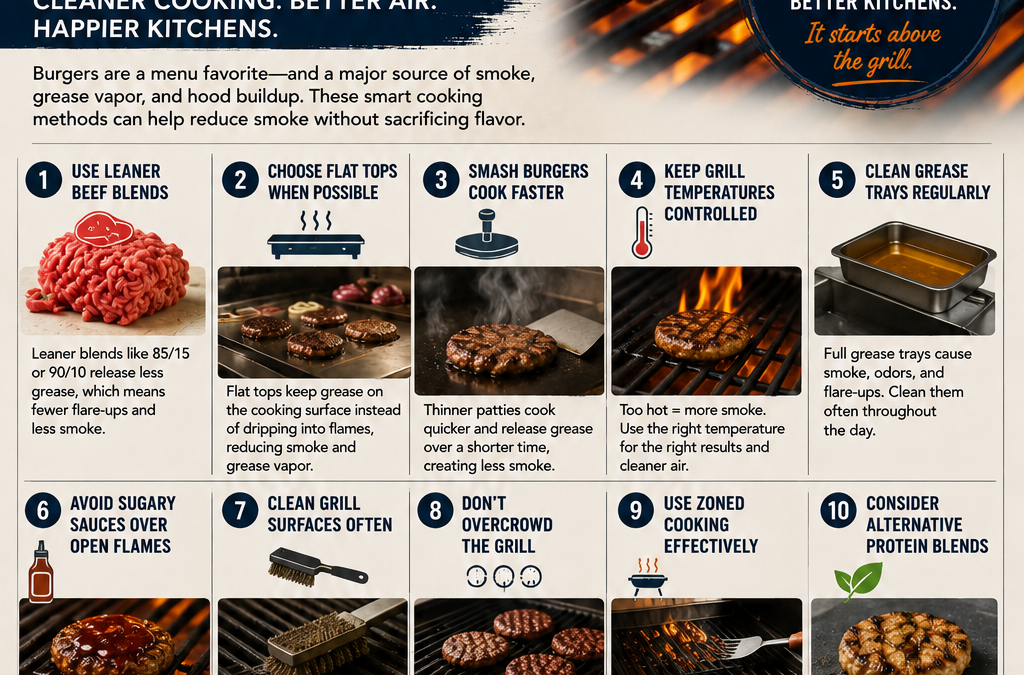
Smarter Cooking Techniques for Cleaner Commercial Kitchens
Burgers are one of the most popular menu items in restaurants, taverns, sports bars, diners, and supper clubs throughout Wisconsin. But they are also one of the biggest contributors to kitchen smoke, grease vapor, and hood system buildup in commercial kitchens.
During busy lunch and dinner rushes, grease dripping from burgers onto hot cooking surfaces can create heavy smoke, flare-ups, and airborne grease particles that travel directly into the kitchen exhaust system. Over time, that buildup can affect kitchen cleanliness, airflow, equipment performance, and overall operating efficiency.
Fortunately, many restaurants are finding ways to reduce smoke and grease production while still delivering flavorful burgers customers love.
Using Leaner Beef Blends
One of the simplest ways to reduce smoke is by using slightly leaner ground beef. High-fat burger blends release large amounts of grease during cooking, especially on charbroilers.
Many kitchens now use:
- 85/15 beef blends
- lean brisket blends
- specialty burger mixes
to help reduce excessive dripping grease while still maintaining flavor and juiciness.
Less dripping grease means:
- fewer flare-ups
- reduced smoke
- cleaner cooking surfaces
Flat Tops vs Charbroilers
Charbroilers create the classic flame-grilled flavor many customers enjoy, but they also generate substantial smoke because grease drips directly onto open flames or heated grates.
Flat top grills can help reduce:
- airborne grease vapor
- flare-ups
- smoke intensity
because grease remains more contained on the cooking surface instead of falling into flames below.
Many restaurants use a combination of both systems depending on kitchen volume and ventilation capacity.
Smash Burgers Cook Faster
Thin smash-style burgers often create less prolonged smoke because they cook quickly and release grease over a shorter period of time.
Faster cook times can help:
- reduce smoke accumulation
- improve kitchen airflow
- speed up ticket times during busy periods
This is one reason smash burgers have become popular in many high-volume restaurants and bars.
Proper Grill Maintenance Matters
Dirty grills and grease trays become major smoke producers during service. Burnt grease and carbon buildup continue smoking long after fresh burgers are added to the grill.
Restaurants should regularly:
- scrape cooking surfaces
- clean grease trays
- remove carbon buildup
- inspect hood filters
to help maintain cleaner kitchen conditions.
Cleaner Burger Cooking Supports Better Kitchens
Reducing burger smoke is not just about comfort. Cleaner cooking methods can help restaurants:
- improve food quality
- reduce odors
- lower grease buildup
- improve ventilation performance
- reduce strain on hood systems
In busy commercial kitchens, even small operational changes can create cleaner air, better efficiency, and a safer environment for both staff and customers. 🍔🔥