
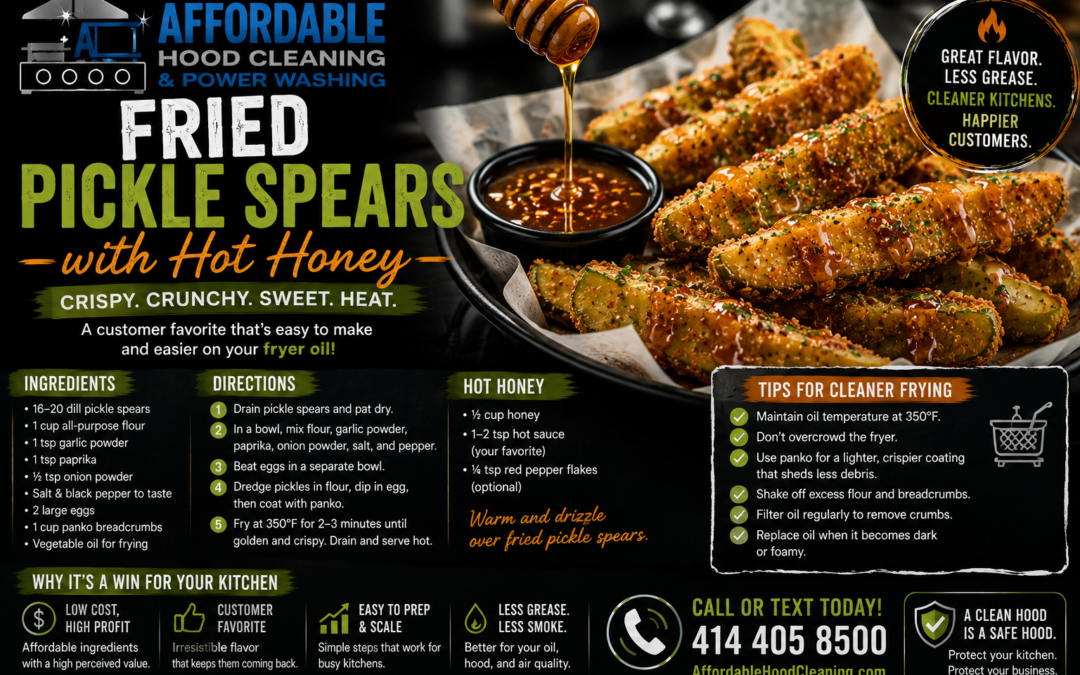
Behind the Fryer Series
Fried pickle spears have become one of the fastest-growing appetizers in restaurants, sports bars, breweries, and taverns across the country. Their crispy coating, tangy flavor, and satisfying crunch make them a customer favorite, while a drizzle of hot honey adds a sweet-and-spicy twist that keeps guests coming back for more.
When prepared using the right coating and frying techniques, fried pickle spears can also be easier on commercial fryers than many heavily battered appetizers. A lighter breading creates fewer loose crumbs, helping maintain cleaner fryer oil, reduce smoke, and minimize grease buildup inside the kitchen hood system.
Restaurants looking for a profitable appetizer that delivers bold flavor and supports cleaner frying operations should consider adding Fried Pickle Spears with Hot Honey to their menu.
Fried Pickle Spears with Hot Honey Recipe
Ingredients
Pickles
- 16 dill pickle spears
- 1 cup all-purpose flour
- 2 large eggs
- 1 cup panko breadcrumbs
- 1 teaspoon garlic powder
- 1 teaspoon paprika
- ½ teaspoon onion powder
- Salt and black pepper to taste
Hot Honey
- ½ cup honey
- 1 to 2 teaspoons hot sauce
- ¼ teaspoon crushed red pepper flakes (optional)
Frying
- Fryer oil heated to 350°F
Directions
Drain the pickle spears thoroughly and pat them completely dry with paper towels. Removing excess moisture helps the coating stick better while reducing splattering during frying.
Mix the flour with garlic powder, paprika, onion powder, salt, and pepper. Place beaten eggs in a second bowl and panko breadcrumbs in a third.
Coat each pickle spear in the seasoned flour, dip into the eggs, then roll lightly in the panko breadcrumbs. Shake off any loose coating before placing them into the fryer.
Cook for approximately 2 to 3 minutes until golden brown and crispy. Drain on a wire rack while warming the honey and hot sauce together. Drizzle the hot honey over the pickles just before serving.
Why This Recipe Helps Keep Fryers Cleaner
Many fried appetizers use thick beer batters that break apart during cooking. Those loose pieces quickly burn in the fryer, creating smoke, dark oil, and carbon buildup.
Using a light panko coating helps reduce:
- Loose breading in fryer oil
- Burnt crumbs
- Oil contamination
- Smoke during service
- Grease vapor entering the hood system
Cleaner oil also produces more consistent color and crispness throughout the day.
Tips for Keeping Grease at a Minimum
Simple fryer habits can significantly improve oil quality and reduce maintenance.
Always dry pickle spears thoroughly before breading. Excess moisture causes splattering and breaks down fryer oil faster.
Use panko breadcrumbs instead of thick batter whenever possible. Their lighter texture produces fewer loose particles.
Avoid overcrowding fryer baskets, which lowers oil temperature and forces food to absorb more grease.
Filter fryer oil regularly to remove crumbs before they burn.
Maintain oil temperatures around 350°F, replacing oil when it becomes dark, foamy, or develops off-flavors.
Keep fryer baskets, heating elements, and surrounding grease trays clean throughout the day to reduce smoke and improve airflow.
Why Restaurants Should Add Fried Pickle Spears with Hot Honey
This appetizer offers excellent profit potential while requiring affordable, readily available ingredients. Pickles, breadcrumbs, flour, and honey are inexpensive pantry staples, making food costs relatively low while allowing for strong menu pricing.
The sweet-and-spicy flavor combination appeals to a wide range of customers and pairs perfectly with burgers, sandwiches, barbecue, smoked meats, wings, and craft beer. It also photographs exceptionally well, making it a menu item customers frequently share on social media, creating additional exposure for your restaurant.
At Affordable Hood Cleaning & Power Washing, we know that every fryer contributes grease vapor to your ventilation system. Choosing recipes that create fewer crumbs, filtering oil regularly, and maintaining your hood system all work together to create a cleaner, safer, and more efficient commercial kitchen. Sometimes the smartest menu additions don’t just taste better, they help your kitchen perform better too.