
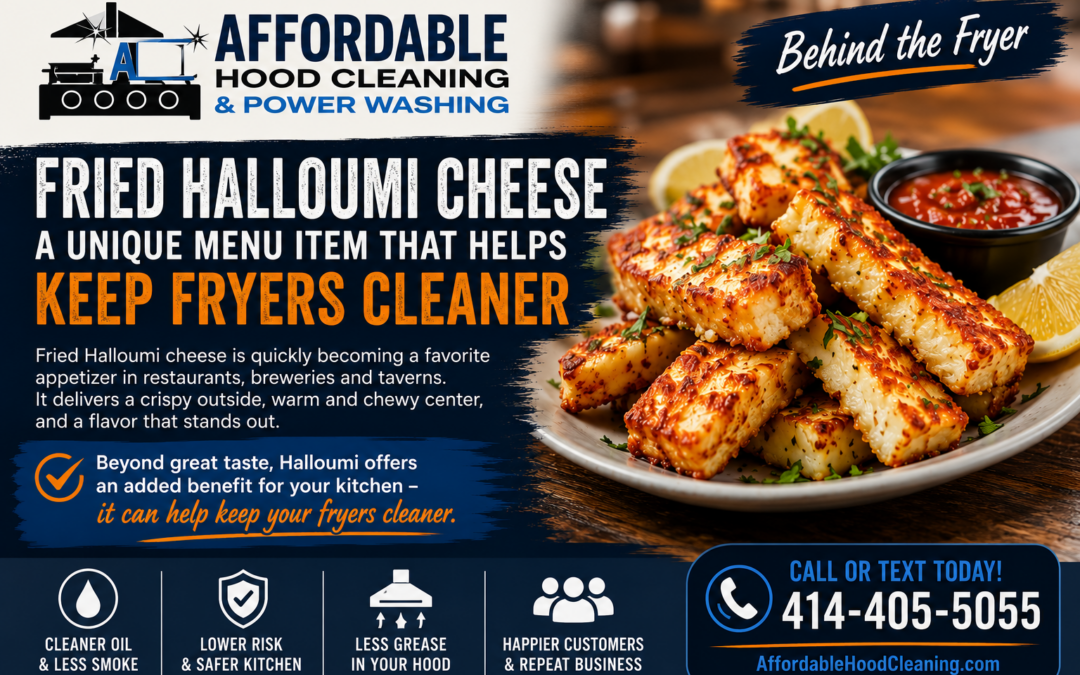
Behind the Fryer Series
Fried Halloumi cheese has become increasingly popular in restaurants, breweries, wine bars, and upscale taverns because it delivers a crispy exterior, a warm, chewy center, and a unique flavor that stands out from traditional fried appetizers. Beyond its appeal to customers, Halloumi offers another advantage that restaurant owners may not immediately consider: when prepared correctly, it can help create a cleaner frying process than many heavily breaded menu items.
Unlike mozzarella sticks, cheese curds, or heavily battered appetizers that shed breading into fryer oil, Halloumi is often served with a light coating or no coating at all. That means fewer crumbs, less carbon buildup, and cleaner oil throughout the day.
A Simple Fried Halloumi Recipe
Ingredients
- 1 block Halloumi cheese
- ½ cup rice flour or all-purpose flour
- 1 teaspoon paprika
- ½ teaspoon garlic powder
- ½ teaspoon black pepper
- Olive oil or lemon wedges for serving
- Fresh herbs such as parsley or dill
- Honey or hot honey for dipping (optional)
Directions
Slice the Halloumi into ½-inch strips or squares. Pat each piece dry with a paper towel before lightly dusting with the seasoned flour mixture. Shake off any excess coating before placing the cheese into a fryer preheated to 350°F. Fry for approximately 2 to 3 minutes until the exterior is golden brown. Remove the cheese and allow it to drain on a wire rack rather than paper towels to help preserve its crisp texture.
Serve immediately with fresh herbs, lemon wedges, marinara, hot honey, or a house-made dipping sauce.
Why Halloumi Can Be Easier on Your Fryer
Because Halloumi requires very little coating, there is less loose flour falling into the fryer. Heavy breading breaks apart during cooking, burns in the oil, and creates carbon particles that lead to smoke, unpleasant odors, and faster oil breakdown.
Halloumi produces:
- Less loose breading
- Fewer burnt particles
- Cleaner fryer oil
- Reduced smoke during service
- Longer-lasting cooking oil
- Less grease vapor entering the hood system
For restaurants that already serve charcuterie boards, Mediterranean dishes, burgers, salads, or small plates, fried Halloumi is a natural menu addition that requires very little extra preparation.
Tips for Keeping Grease at a Minimum
No matter what you’re frying, small operational habits can make a significant difference in grease production and fryer cleanliness.
Always pat food dry before frying. Excess moisture creates steam and causes oil to splatter, increasing airborne grease that eventually reaches your hood system.
Use a light coating whenever possible. Thick batters and heavy breading release more particles into the fryer, causing oil to darken faster and creating more smoke.
Avoid overcrowding fryer baskets. Overloading lowers the oil temperature, forcing food to cook longer and absorb more oil while generating additional grease vapor.
Filter fryer oil regularly throughout the day, especially during busy lunch and dinner service. Removing crumbs and burnt particles extends oil life and helps maintain consistent food quality.
Finally, keep fryer temperatures between 350°F and 360°F unless the recipe requires otherwise. Oil that is too cool allows food to absorb excess grease, while overheated oil breaks down quickly and produces unnecessary smoke.
A Smart Addition to Your Menu
Adding fried Halloumi gives customers something different while supporting a cleaner frying operation. It appeals to diners looking for unique appetizers, vegetarian-friendly options, and shareable plates, all while producing less fryer residue than many traditional fried foods.
At Affordable Hood Cleaning & Power Washing, we know that even the cleanest frying techniques still produce grease vapor over time. Pairing smart menu choices with regular hood cleaning, filter maintenance, and exhaust system inspections helps keep commercial kitchens operating safely, efficiently, and ready for the next busy service. Behind every great meal is a clean kitchen, and every small improvement behind the fryer contributes to a better experience for both staff and customers.