Mastering Restaurant Safety
The Complete Milwaukee Hood Cleaning Guide & NFPA 96 Compliance Resource
Everything Milwaukee Businesses Need to Know About Commercial Hood Cleaning, Fire Safety, Kitchen Exhaust Systems & Wisconsin Inspection Requirements
Commercial kitchen exhaust systems are one of the most important fire safety components inside any food service operation. Throughout Milwaukee and southeastern Wisconsin, thousands of kitchens operate every day in:
- restaurants
- hospitals
- nursing homes
- schools
- hotels
- cafeterias
- churches
- food trucks
- assisted living facilities
- commercial facilities
- manufacturing cafeterias
- event venues
- sports facilities
Every one of these kitchens produces grease, smoke, heat, and airborne contaminants that travel into the exhaust system during cooking.
Without proper maintenance and professional hood cleaning, grease buildup inside commercial kitchen exhaust systems can become a major fire hazard.
This complete Milwaukee hood cleaning guide explains:
- what hood cleaning is
- NFPA 96 requirements
- Milwaukee fire inspection considerations
- Wisconsin compliance standards
- cleaning frequency recommendations
- exhaust fan maintenance
- fire prevention
- rooftop grease containment
- commercial kitchen safety
- common hood cleaning mistakes
- frequently asked questions
Whether you operate a Milwaukee restaurant, a hospital kitchen in Wauwatosa, a nursing home in Greenfield, a school cafeteria in West Allis, or a food production facility anywhere in Wisconsin, maintaining a clean kitchen exhaust system is critical for safety, compliance, and proper operation.
Table of Contents
- What Is Commercial Hood Cleaning?
- Why Hood Cleaning Matters in Milwaukee
- Understanding NFPA 96
- Cleaning Frequency Recommendations
- What Happens During Professional Hood Cleaning
- Fire Hazards Caused by Grease Buildup
- Milwaukee Fire Inspections & Wisconsin Compliance
- Common Hood Cleaning Mistakes
- Signs Your Hood System Needs Cleaning
- Exhaust Fan & Rooftop Maintenance
- Hood Cleaning Costs in Milwaukee
- Industries That Require Hood Cleaning
- Healthcare & Institutional Kitchen Cleaning
- Wisconsin Winter Challenges
- Emergency Hood Cleaning Situations
- Benefits of Preventative Maintenance
- Choosing a Milwaukee Hood Cleaning Company
- Frequently Asked Questions
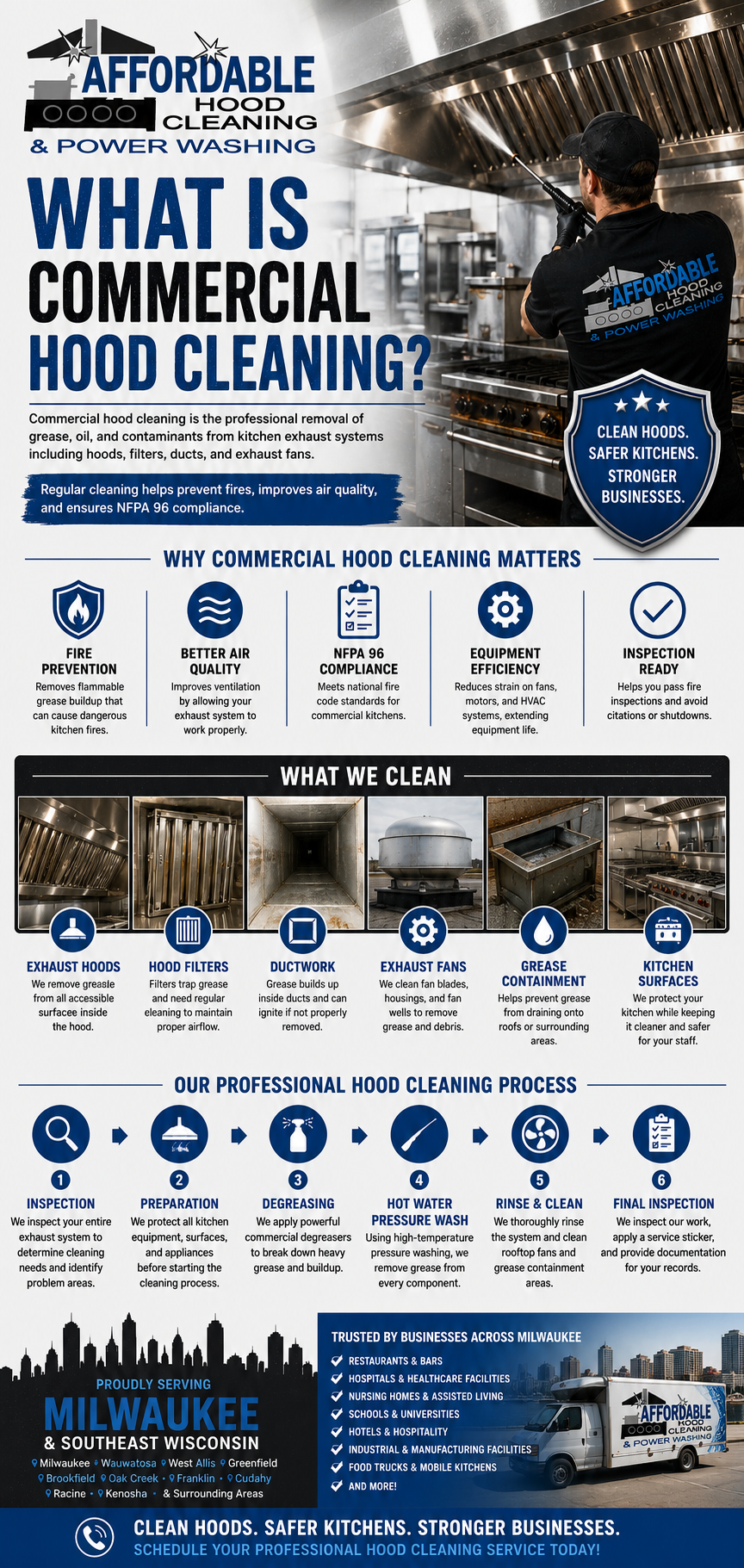
What Is Commercial Hood Cleaning?
Commercial hood cleaning is the professional cleaning of a kitchen exhaust system designed to remove grease buildup from:
- exhaust hoods
- filters
- ductwork
- rooftop exhaust fans
- fan housings
- grease containment systems
The purpose of hood cleaning is to:
- reduce fire risks
- improve airflow
- maintain ventilation efficiency
- support fire code compliance
- improve kitchen safety
- extend equipment lifespan
Every time food is cooked, grease-laden vapors rise into the ventilation system. Over time, grease accumulates throughout the exhaust system, especially in hidden ductwork and rooftop fan areas.
If left untreated, grease buildup becomes highly combustible.
Why Hood Cleaning Matters in Milwaukee Commercial Kitchens
Milwaukee’s commercial food service industry is extremely diverse.
Local facilities commonly include:
- hospitals
- healthcare campuses
- assisted living communities
- universities
- taverns
- breweries
- restaurants
- schools
- industrial cafeterias
- correctional facilities
- hotels
- event venues
Many of these kitchens operate:
- fryers
- charbroilers
- ovens
- griddles
- steam systems
- high-volume cooking equipment
These operations create significant grease accumulation that requires ongoing professional cleaning.
In Wisconsin, facilities serving:
- Friday fish fries
- fried foods
- institutional meals
- high-volume dining operations
often generate especially heavy grease buildup inside exhaust systems.
Understanding NFPA 96
One of the most important standards for commercial kitchen exhaust systems is:
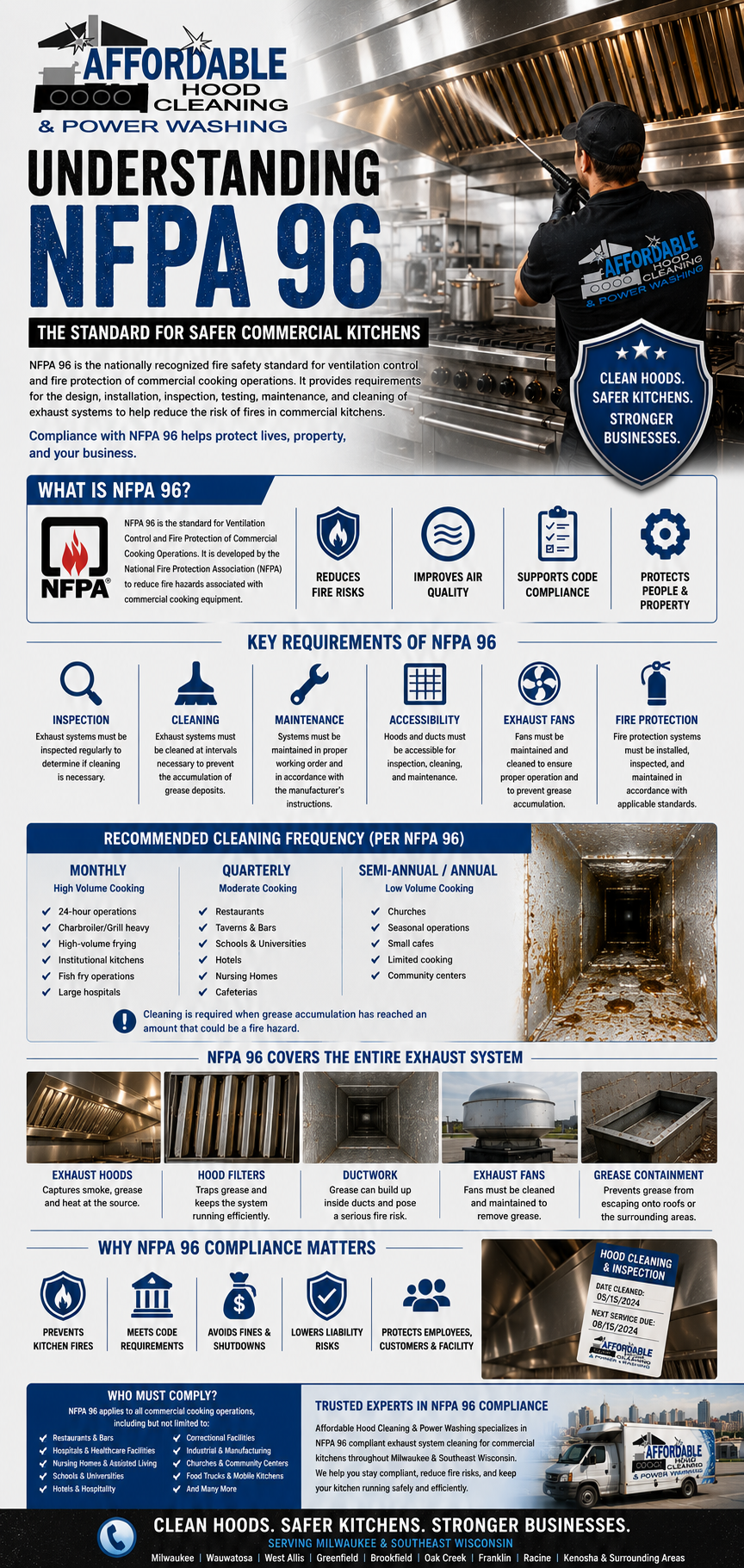
NFPA 96
NFPA stands for:
National Fire Protection Association
NFPA 96 is the national fire safety standard covering:
Ventilation Control and Fire Protection of Commercial Cooking Operations
This standard outlines:
- cleaning frequency recommendations
- inspection standards
- maintenance expectations
- grease removal requirements
- exhaust system safety procedures
Many Milwaukee-area inspectors and Wisconsin municipalities follow NFPA 96 guidelines when evaluating commercial kitchen exhaust systems.
What NFPA 96 Requires
NFPA 96 requires commercial kitchen exhaust systems to be:
- inspected regularly
- cleaned when grease accumulation becomes excessive
- maintained for safe operation
- accessible for inspection and service
The standard also addresses:
- rooftop exhaust fans
- grease containment
- duct accessibility
- filter maintenance
- ventilation safety
- fire suppression compatibility
Professional hood cleaning companies typically apply a service sticker documenting:
- cleaning date
- company information
- recommended next service date
Fire inspectors often review this information during inspections.
How Often Should Milwaukee Hood Systems Be Cleaned?
Cleaning frequency depends on:
- cooking volume
- cooking methods
- hours of operation
- grease production
NFPA 96 provides recommended cleaning intervals.
Monthly Hood Cleaning
High-volume facilities may require:
Monthly Cleaning
Examples:
- hospitals
- institutional kitchens
- high-volume restaurants
- busy cafeterias
- fish fry operations
- 24-hour facilities
Quarterly Hood Cleaning
Many Milwaukee commercial kitchens require:
Quarterly Cleaning
Examples:
- restaurants
- taverns
- schools
- hotels
- nursing homes
- assisted living facilities
Quarterly service is one of the most common schedules throughout southeastern Wisconsin.
Semi-Annual Hood Cleaning
Lower-volume kitchens may qualify for:
Semi-Annual Cleaning
Examples:
- churches
- seasonal facilities
- small community centers
- limited cooking operations
Why Wisconsin Facilities Often Need More Frequent Service
Wisconsin’s food culture often creates higher grease loads than many regions.
Commercial kitchens throughout Milwaukee and Wisconsin frequently prepare:
- fried foods
- fish fry meals
- grilled foods
- institutional dining meals
- high-volume cafeteria service
These operations create substantial grease accumulation inside exhaust systems.
Facilities may require more frequent service than expected depending on cooking conditions.
What Happens During Professional Hood Cleaning?
Step 1
Exhaust System Inspection
Technicians inspect:
- hood interiors
- ductwork
- rooftop exhaust fans
- grease buildup levels
- filters
- access panels
- containment systems
Step 2
Kitchen Preparation
Protective coverings are placed over:
- appliances
- floors
- nearby surfaces
- cooking equipment
This helps contain water and grease during cleaning.
Step 3
Degreasing & Pressure Washing
Commercial-grade degreasers and hot water pressure washing systems are used to remove grease buildup throughout the system.
Cleaning includes:
- hood canopy
- plenum
- duct interiors
- filters
- rooftop fan systems
Step 4
Rooftop Fan Cleaning
The rooftop exhaust fan is one of the most important components of the system.
Grease buildup around rooftop fans can:
- create fire hazards
- damage roofing materials
- attract pests
- cause rooftop contamination
Professional cleaning includes:
- fan blades
- fan housing
- hinges
- containment systems
- surrounding rooftop areas
Step 5
Final Inspection & Documentation
After service:
- the system is inspected
- service stickers are applied
- documentation is provided
This documentation may assist with inspections and maintenance records.
Fire Hazards Caused by Grease Buildup
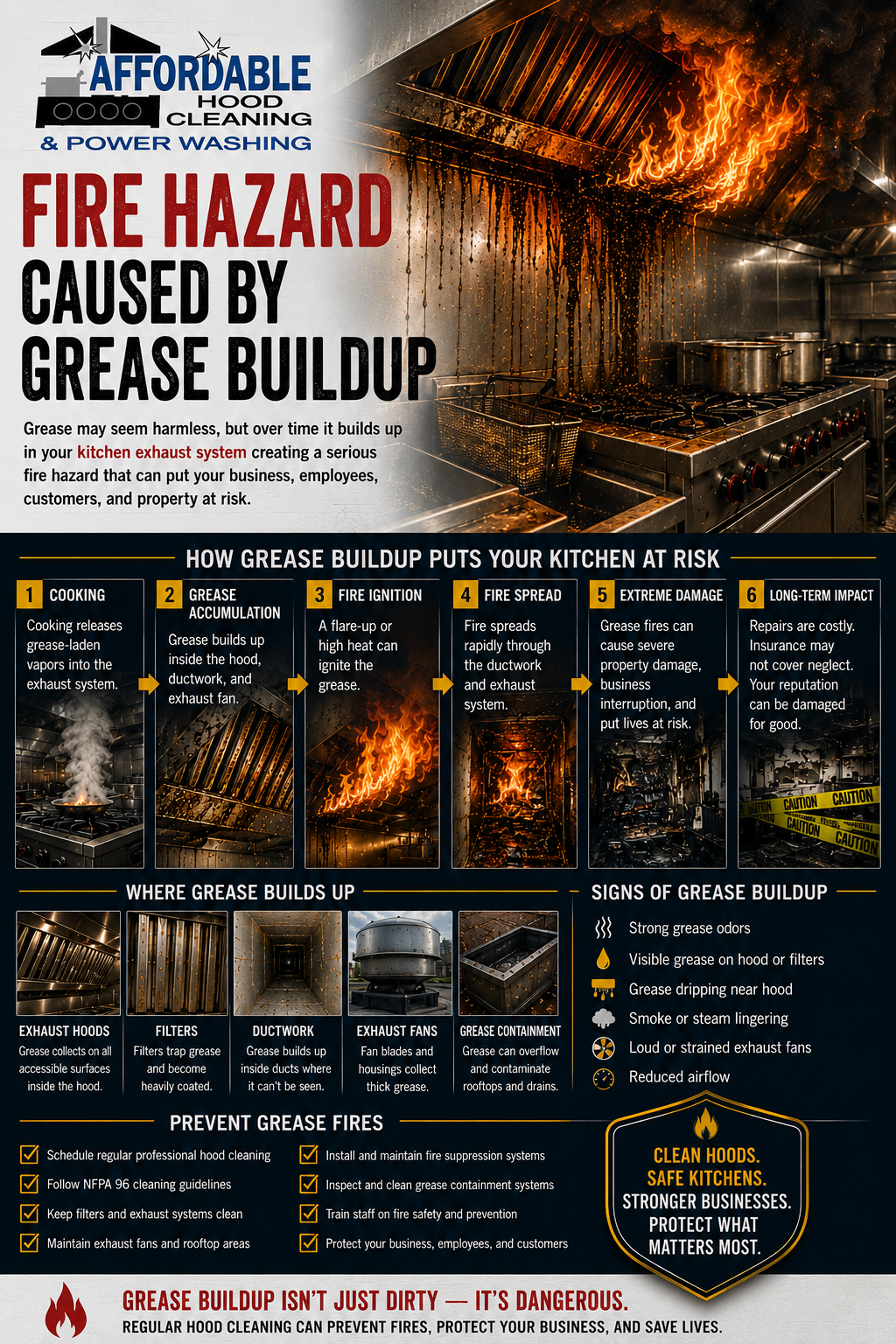
Grease accumulation inside commercial kitchen exhaust systems is highly flammable.
A small cooking flare-up can ignite grease deposits inside:
- hood plenums
- ductwork
- rooftop fans
Once fire enters the exhaust system, flames can spread rapidly through the building.
Commercial kitchen fires may result in:
- property damage
- business interruption
- insurance claims
- inspection violations
- operational shutdowns
Routine hood cleaning helps reduce these risks significantly.
Milwaukee Fire Inspections & Wisconsin Compliance
Commercial kitchens throughout Milwaukee and Wisconsin may be inspected for:
- grease accumulation
- hood cleanliness
- exhaust fan conditions
- service documentation
- filter maintenance
- access panel accessibility
Inspectors often review:
- service stickers
- visible grease buildup
- rooftop fan conditions
- system accessibility
- maintenance records
Failure to maintain systems may result in:
- citations
- reinspection fees
- warnings
- temporary shutdowns
What Milwaukee Fire Inspectors Commonly Look For
Milwaukee-area inspectors frequently review:
- excessive grease buildup
- inaccessible ductwork
- dirty rooftop fans
- missing access panels
- damaged filters
- rooftop grease contamination
- missing cleaning documentation
- overdue maintenance stickers
Routine professional hood cleaning helps facilities remain better prepared for inspections throughout Wisconsin.
Common Hood Cleaning Mistakes
Only Cleaning Visible Areas
Many businesses clean only visible hood surfaces while neglecting:
- duct interiors
- rooftop fans
- hidden grease accumulation
The most dangerous grease buildup is often hidden from view.
Waiting Too Long Between Services
Some facilities delay cleaning until inspections occur or airflow problems develop.
By then:
- grease buildup may already be hazardous
- emergency cleaning may be needed
- inspection issues may arise
Preventative maintenance is always safer and more cost-effective.
Using Inexperienced Contractors
Commercial hood cleaning requires specialized knowledge and equipment.
Improper cleaning may:
- leave grease behind
- damage systems
- create compliance issues
- increase fire risks
Choose experienced hood cleaning professionals familiar with Milwaukee-area commercial kitchens and NFPA 96 standards.
Signs Your Exhaust System Needs Cleaning
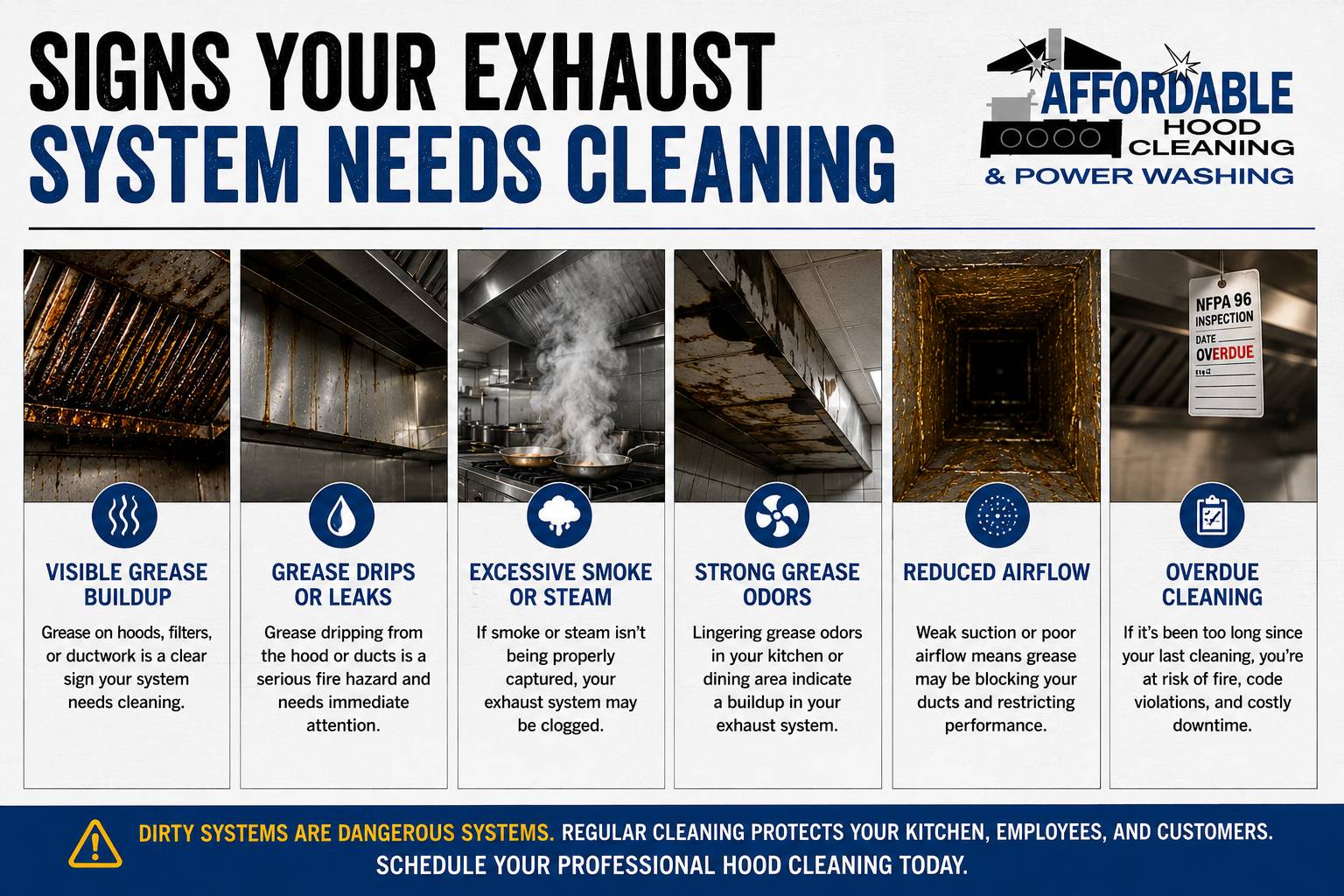
Warning signs include:
- strong grease odors
- visible grease buildup
- smoke lingering in kitchen areas
- reduced airflow
- greasy rooftop areas
- loud exhaust fans
- sticky surfaces near hood systems
- grease dripping from hood components
If these conditions appear, service may already be overdue.
Hood Cleaning Costs in Milwaukee
Several factors influence the cost of commercial hood cleaning services, including:
- kitchen size
- cooking volume
- grease accumulation
- rooftop accessibility
- number of exhaust fans
- ductwork complexity
- hours of operation
- frequency of prior cleanings
High-volume Milwaukee kitchens such as restaurants, hospitals, cafeterias, taverns, and institutional facilities often require more extensive service because of increased grease production.
Facilities that stay on regular maintenance schedules are often easier and more cost-effective to maintain than systems that have gone extended periods without professional cleaning.
Industries That Require Hood Cleaning
Commercial hood cleaning is not limited to restaurants.
Milwaukee-area facilities commonly requiring exhaust system cleaning include:
- hospitals
- nursing homes
- assisted living facilities
- schools
- universities
- churches
- hotels
- casinos
- breweries
- food manufacturing facilities
- cafeterias
- correctional facilities
- event venues
- sports stadiums
- corporate cafeterias
Any facility producing grease-laden vapors may require professional exhaust system cleaning.
Hood Cleaning for Hospitals & Nursing Homes
Healthcare kitchens often operate long hours while preparing meals for:
- patients
- residents
- visitors
- medical staff
Routine hood cleaning helps healthcare facilities:
- improve ventilation
- reduce fire risks
- support sanitation efforts
- maintain safer kitchen conditions
- reduce grease accumulation
Hospitals and nursing homes throughout Milwaukee and Wisconsin often require ongoing preventative exhaust system maintenance.
Before & After Hood Cleaning Results
Heavy grease accumulation is often hidden inside ductwork and rooftop fan systems.
Professional hood cleaning helps restore systems closer to bare metal conditions where accessible.
Before-and-after cleaning may help improve:
- airflow
- kitchen cleanliness
- fire safety
- inspection readiness
- rooftop conditions
Many Milwaukee facilities underestimate how much grease has accumulated until the system is professionally cleaned.
(Insert before-and-after cleaning photos here.)
Exhaust Fan Maintenance
The exhaust fan removes heat, smoke, and grease-laden air from the building.
Routine maintenance helps:
- improve airflow
- reduce strain on motors
- extend equipment lifespan
- reduce rooftop contamination
Maintenance may include:
- belt inspections
- lubrication
- hinge inspection
- fan balancing
- grease containment maintenance
Rooftop Grease Containment
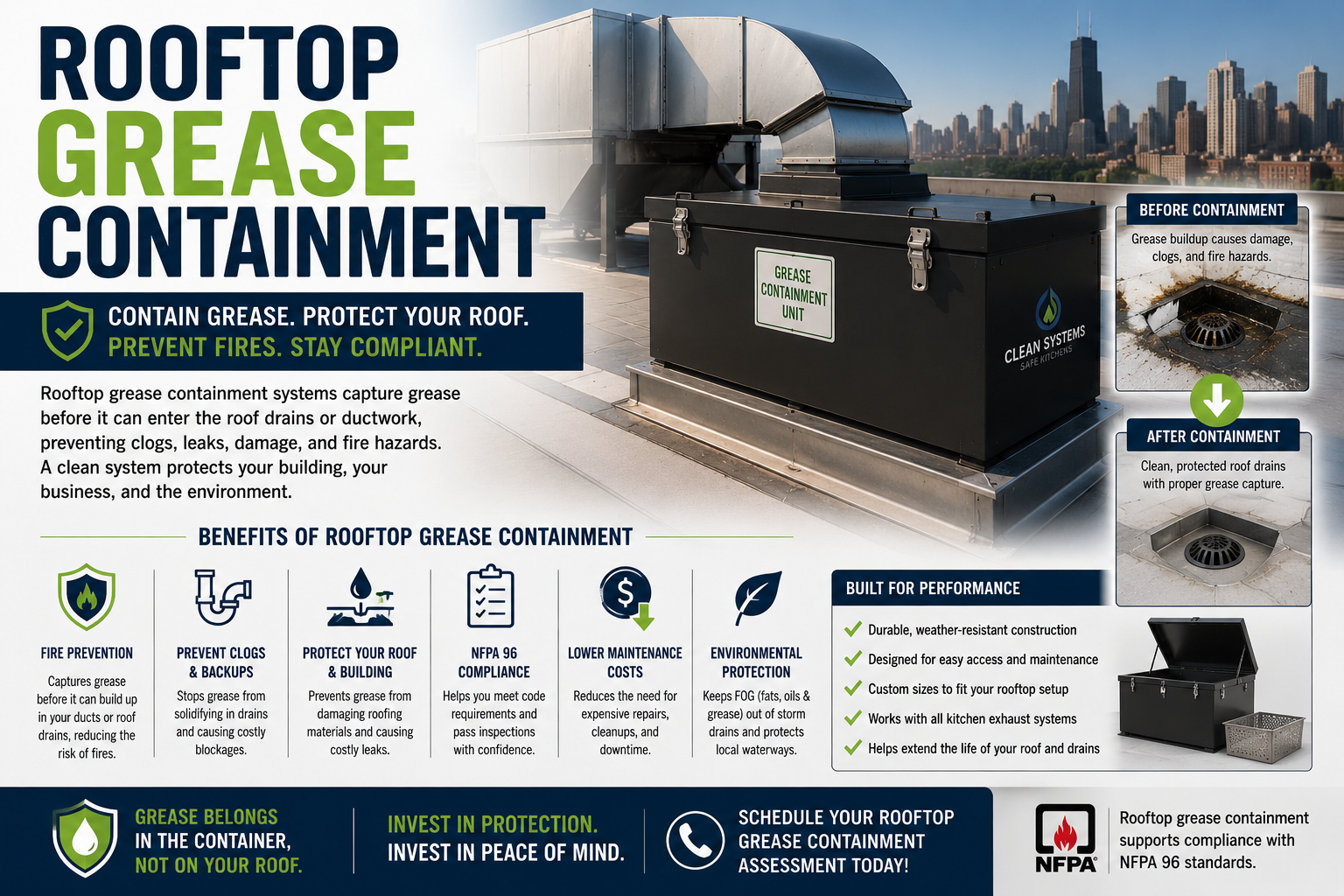
Grease escaping rooftop fans can:
- damage roofing materials
- create safety hazards
- attract insects
- cause odor issues
Grease containment systems help protect:
- rooftops
- drainage systems
- surrounding property
Commercial facilities throughout Milwaukee often install grease containment systems to help reduce rooftop contamination.
Wisconsin Winter Challenges for Commercial Kitchens

Wisconsin winters create unique maintenance challenges for commercial kitchen exhaust systems.
Snow, ice, freezing temperatures, and rooftop conditions may affect:
- rooftop fan accessibility
- grease drainage
- rooftop safety
- emergency service scheduling
Milwaukee-area businesses often benefit from preventative maintenance scheduling before severe winter weather arrives.
Emergency Hood Cleaning Situations
Emergency service may be necessary if a facility experiences:
- severe grease buildup
- smoke backup into kitchen areas
- rooftop grease overflow
- failed inspections
- grease dripping from hood systems
- strong burning odors
- ventilation system failures
Delaying service may increase fire risks and operational disruptions.
Benefits of Routine Hood Cleaning
Professional hood cleaning provides several major benefits.
Improved Fire Safety
Removing grease buildup significantly reduces fire hazards.
Better Ventilation
Clean systems improve airflow and reduce smoke accumulation.
Longer Equipment Life
Fans and ventilation equipment operate more efficiently when properly maintained.
Reduced Emergency Repairs
Preventative maintenance helps avoid expensive emergency service calls.
Better Inspection Readiness
Routine service helps facilities stay prepared for inspections and compliance reviews.
Choosing a Milwaukee Hood Cleaning Company
When hiring a hood cleaning provider, ask:
- Do they follow NFPA 96 standards?
- Are they experienced with commercial kitchens?
- Are they insured?
- Do they clean the full exhaust system?
- Do they service rooftop fans?
- Do they provide documentation?
- Do they work with institutional facilities?
Experience with Milwaukee-area kitchens and Wisconsin commercial facilities matters.
Final Thoughts
Commercial hood cleaning is one of the most important safety and maintenance responsibilities for Milwaukee businesses operating commercial kitchens.
Whether serving restaurant guests, hospital patients, nursing home residents, hotel visitors, students, or large institutional dining operations, maintaining a clean kitchen exhaust system helps:
- reduce fire hazards
- improve ventilation
- support compliance
- extend equipment lifespan
- protect employees and occupants
From Milwaukee restaurants and Wauwatosa hospitals to Greenfield assisted living facilities and Wisconsin school cafeterias, regular hood cleaning is essential for safe and efficient kitchen operation.
Proper maintenance today can help protect your facility, staff, and business for years to come.
Common Questions About Hood Cleaning
Get answers to the most frequently asked questions about our hood cleaning services and NFPA 96 compliance.
How often should commercial hood systems be cleaned?
Most systems require quarterly cleaning, though high-volume facilities may need monthly service.
Are rooftop exhaust fans included in hood cleaning?
Professional service should include rooftop fan cleaning and grease containment inspection.
What is NFPA 96 compliance?
NFPA 96 is the fire safety standard governing commercial kitchen ventilation and exhaust systems.
Can I clean the hood myself?
While basic maintenance can be done in-house, professional cleaning is necessary to meet NFPA 96 standards and ensure thorough removal of grease and contaminants.
What happens if I don't comply with NFPA 96?
Non-compliance can lead to increased fire risk, potential fines, and even closure of your establishment. Regular cleaning helps avoid these issues.
How long does the cleaning process take?
The duration depends on the size and condition of your system. Typically, a thorough cleaning can take several hours to ensure all components are properly addressed.
Do schools require kitchen exhaust cleaning?
Yes. School cafeterias and institutional kitchens often require routine hood cleaning.
What are signs a hood system needs cleaning?
Grease odors, smoke buildup, reduced airflow, rooftop grease, and visible grease accumulation are common warning signs.
Is hood cleaning required in Wisconsin?
Many Wisconsin municipalities and fire inspectors follow NFPA 96 guidelines for commercial kitchen exhaust systems.
Do hospitals and nursing homes require hood cleaning?
Yes. Commercial kitchens in healthcare and assisted living facilities still produce grease accumulation requiring maintenance.
What areas do you service?
We offer hood cleaning services across the Milwaukee area, Green Bay, and Madison, but are also open to anywhere in Wisconsin, ensuring local businesses maintain safe and compliant kitchen environments.
Can grease buildup cause fires?
Yes. Grease accumulation inside exhaust systems is highly flammable.
Do Milwaukee inspectors check hood systems?
Yes. Inspectors may review grease buildup, service stickers, and maintenance records.
Can food trucks require hood cleaning?
Yes. Food trucks and mobile kitchens still require proper exhaust system maintenance.
What Our Clients Say
“I have a small restaurant and was in a jam (literal) with grease stopping my exhaust fan on the hood system. AJ came almost immediately to assess the situation and made a plan to come back the very next day before our busy Friday night. Not only did he assemble a great team to clean the very dirty old hood from the previous owner, he gave great advice and worked with me to make this very affordable! I am very impressed and do not write reviews often, but other restaurant owners should be aware of their hood cleaning options and the importance of doing it regularly. Aj is super involved in his company and made sure his people did a great job also. Will definitely work with them again. I wish I had a before and after shot of the outstanding work they did!” ~ Angela Marie
Schedule Your Hood Cleaning Today
Ensure your kitchen’s safety and compliance with our expert hood cleaning services. Request a quote now to keep your operations running smoothly and meet NFPA 96 standards.