
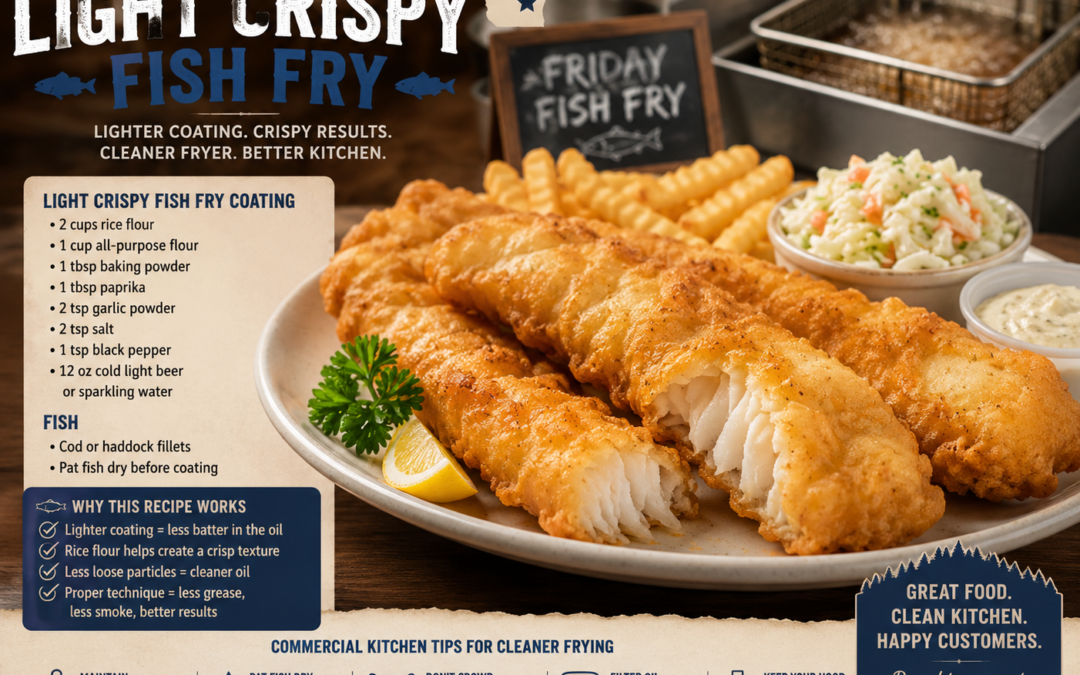
A Cleaner Frying Approach for Commercial Kitchens
Busy fish fry kitchens can generate significant grease vapor during peak service hours. One way some commercial kitchens reduce excess smoke and fryer residue is by using lighter coatings and maintaining stable fryer temperatures.
This lighter-style fish fry coating is designed to create a crispy finish while reducing loose breading particles that contribute to dirty fryer oil and excess grease vapor.
Light Crispy Fish Fry Coating
Ingredients
- 2 cups rice flour
- 1 cup all-purpose flour
- 1 tbsp baking powder
- 1 tbsp paprika
- 2 tsp garlic powder
- 2 tsp salt
- 1 tsp black pepper
- 12 oz cold light beer or sparkling water
Fish
- Cod or haddock fillets
- Pat fish dry before coating
Why This Style Creates Less Fryer Residue
1. Rice Flour Helps Reduce Loose Particles
Rice flour tends to fry cleaner than heavy flour-only batters because it creates:
- thinner coatings
- crisp texture
- less batter shedding
Less loose breading means:
- cleaner oil
- reduced smoke
- fewer burnt particles
2. Patting Fish Dry Reduces Splatter
Moisture is one of the biggest causes of fryer splatter and steam bursts.
Drying fish before battering helps:
- stabilize oil
- reduce airborne grease mist
- improve coating adhesion
3. Lighter Batter = Less Oil Contamination
Very thick batters often break apart during high-volume frying.
A thinner coating can:
- reduce carbon buildup
- reduce oil darkening
- help exhaust systems stay cleaner longer
4. Proper Fryer Temperature Matters
For this type of fish fry:
Recommended fryer temp: 345°F to 350°F
Lower temperatures can cause:
- oily fish
- longer cook times
- more grease vapor
Stable fryer temperatures help reduce smoke and excess grease buildup inside commercial hood systems.
Commercial Kitchen Tip
Restaurants running high-volume Friday fish fry service should also:
- skim fryer debris regularly
- filter oil frequently
- avoid overcrowding baskets
- inspect hood filters during busy seasons
Heavy fish fry production can place extra strain on kitchen exhaust systems, especially during Lent and peak Wisconsin supper club traffic.
Professional exhaust maintenance is separate from day-to-day fryer care. Learn about commercial kitchen hood cleaning and cleaning frequency considerations, or request a quote for your Wisconsin kitchen.