Bars and grills often produce some of the heaviest grease buildup found in commercial kitchens.
Between fryers running for hours, burgers sizzling on flat-top grills, steaks cooking over charbroilers, wings dropping into hot oil, and late-night food service, a busy bar kitchen can generate a surprising amount of airborne grease.
That is why restaurant hood cleaning for bars and grills is so important.
Even when the visible parts of the kitchen look clean, grease can continue accumulating inside the hood, filters, ductwork, and rooftop exhaust fan.
Why Bars and Grills Produce So Much Grease
Every cooking method creates a different amount of heat, smoke, steam, and grease.
A restaurant that mainly bakes or reheats food may produce significantly less grease than a bar and grill cooking burgers, bacon, wings, fish, fries, and steaks throughout the day.
Fryers are an obvious source of grease, but they are not the only culprit.
Flat-top grills, ranges, charbroilers, and griddles can all release grease particles into the air. The kitchen exhaust system pulls those particles upward, where they begin collecting inside the hood system.
The busier the kitchen, the faster that buildup can occur.
Fryers Add Grease to the Exhaust System
Fried foods are popular in bars for a reason. Wings, mozzarella sticks, onion rings, cheese curds, fries, fish, and fried appetizers are fast to prepare and easy to share.
But constant frying can create airborne oil and grease particles.
When several fryers operate for hours every day, grease can begin coating nearby surfaces, hood filters, and other parts of the exhaust system.
Regularly cleaning the fryer area helps, but normal kitchen cleaning cannot reach everything inside the ventilation system.
That is where professional hood cleaning becomes necessary.
Burgers and Grills Create Their Own Grease Problems
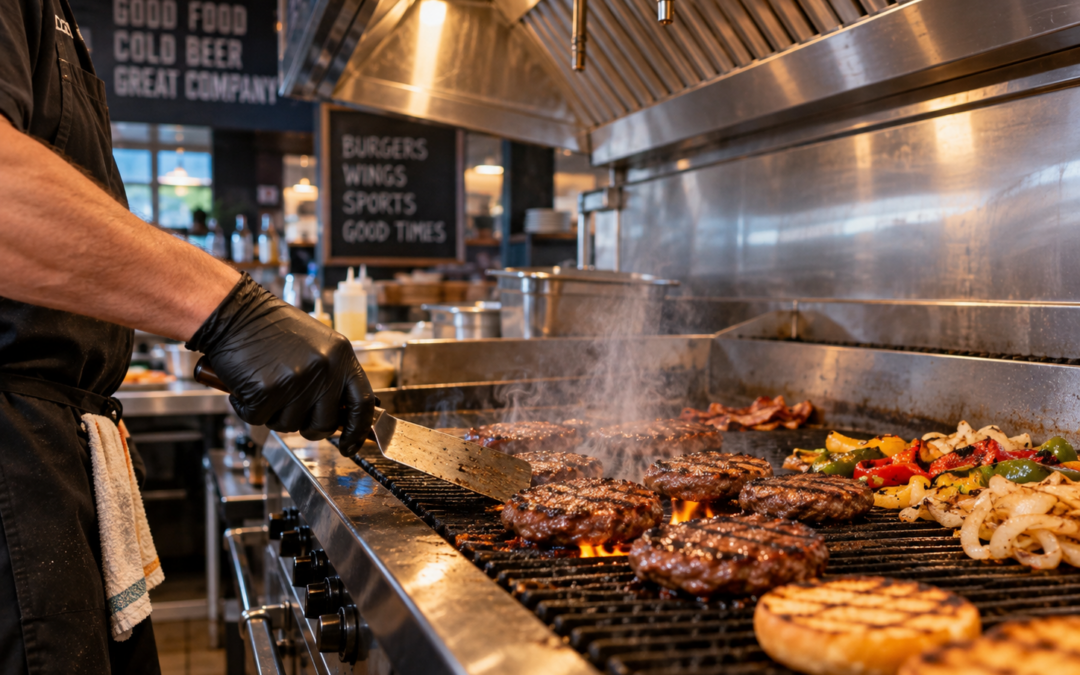
A busy grill station can produce tremendous amounts of grease.
Hamburgers, bacon, sausage, steaks, and other fatty foods release grease as they cook. Some of that grease stays on the grill, while some becomes airborne.
High heat can also create smoke and grease vapor that gets pulled directly into the exhaust hood.
If your bar serves hundreds of burgers every week, all that cooking can add up quickly.
Charbroilers Can Be Especially Tough on Hood Systems
Charbroilers provide the smoky flavor customers love, but they can also create substantial smoke and grease.
Fat dripping onto hot surfaces can vaporize and send additional grease particles into the exhaust system.
Restaurants using charbroilers may notice that their hood filters become dirty much faster than expected.
Keeping an eye on filter condition can provide a useful clue about how quickly grease is accumulating throughout the rest of the system.
Late-Night Kitchens Can Accumulate Grease Quickly
Many bars and grills operate longer hours than traditional restaurants.
A kitchen may begin serving lunch and continue cooking until late at night. That can mean 10, 12, or even more hours of cooking activity in a single day.
Longer cooking hours mean the exhaust system is working longer too.
Even if individual meals do not seem particularly greasy, thousands of orders over weeks and months can lead to significant buildup.
Hood Filters Are Only Part of the System
One mistake restaurant owners sometimes make is assuming clean hood filters mean the entire exhaust system is clean.
Filters are only the first stage.
Behind the filters are areas of the hood and exhaust system that may not be visible during everyday kitchen operations.
Grease can accumulate inside accessible ductwork and around the rooftop exhaust fan.
Professional commercial hood cleaning is designed to reach areas that routine kitchen cleaning cannot.
Why Grease Buildup Matters
Grease buildup is not just unattractive.
Heavy grease deposits can affect the cleanliness and performance of a commercial kitchen exhaust system.
A properly maintained system helps move smoke, heat, odors, and airborne grease away from the cooking area.
Regular cleaning can also help restaurant owners identify problems such as damaged filters, excessive buildup, or areas that may need additional attention.
Don’t Wait Until the Hood Looks Dirty
One of the tricky things about grease buildup is that much of it happens out of sight.
The stainless steel hood may look reasonably clean from the kitchen while grease continues accumulating deeper inside the system.
That is why commercial kitchens should not rely solely on appearance when deciding when cleaning is necessary.
Your cooking volume, equipment, menu, and hours of operation all affect how quickly grease builds up.
A high-volume bar serving fried foods and grilled meats may need more frequent attention than a lower-volume kitchen.
Professional Restaurant Hood Cleaning for Bars and Grills
Affordable Hood Cleaning and Power Washing provides commercial kitchen hood cleaning for bars, grills, restaurants, taverns, and other food-service businesses throughout Wisconsin.
Our hood cleaning service focuses on removing grease buildup from the commercial kitchen exhaust system, including areas that everyday kitchen staff cannot easily reach.
For a busy bar or grill, keeping the hood system professionally cleaned should be part of the regular maintenance schedule rather than something handled only when grease becomes obvious.
Your kitchen may look clean at eye level.
The real question is what is happening above the cooking equipment.
When fryers, grills, and charbroilers are working every day, grease buildup can happen faster than you think.